The campaign
Handbook · chapter 7
A single battle is a day. A campaign is a run of days, most of them not battles, with the same five tanks and the same twenty-five men from one to the next, less the ones you lose and plus the strangers the depot sends. This chapter is what you are up against in each theater, and what a day of fighting leaves behind and a day of rest gives back.
The order of battle
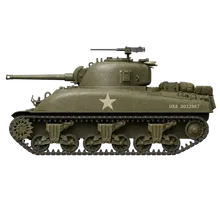
In Tunisia you have five M4A1 Shermans with the 75 mm gun, dry stowage, five men each. Across the wadi in February 1943 the 21st Panzer Division fields the Panzer III with its long 50 mm and the Panzer IV with a long 75, and behind them the towed 50 mm Pak 38 that does much of the killing. The theater’s order of battle in the Reference carries more than the February scenarios field: the Tiger, whose front your gun cannot touch, the 88, and the Italian Semovente and M14/41.
In Italy in 1944 the division has re-equipped you with new Shermans, and the enemy has re-equipped too. The Panther has the Tiger’s problem in front and a long 75 that holes you at any range you can see it. The StuG III is a low, well-armoured assault gun that is hard to see and hard to hole from the front. The 75 mm Pak 40 is the Pak 38’s big brother, and it is in every farm.
The Reference carries the vehicle table and the penetration figures, and they are facts from the printed references, not tuning. The short version: your gun is enough for the Panzer III, the Panzer IV’s turret and flanks, the StuG’s flank and the Italians; it is a poor bet against a Panzer IV’s glacis at range and none against a Tiger’s or a Panther’s front, and against those you need the side, the smoke, or the road home.
Infantry come as squads. A German rifle squad has a machine gun and, in Tunisia, no hand-held anti-tank weapon; they close-assault instead. Italian squads are smaller. American armoured infantry, when they are with you, have a bazooka that can hole a tank but seldom hits and only close in.
A day of fighting
A battle leaves marks on the men, and the campaign keeps the ledger.
Fatigue. Fighting a battle tires a man; having his tank hit during it tires him more; being knocked out or bailing out more still. A day out of action gives most of it back. A battle begins with every man’s stress set to his fatigue, so a platoon on its third day of fighting starts the day already shaken, and rested men start fresh.
Steadiness. Every battle a man survives makes him harder to frighten, and it never wears off: a man does not unlearn what he has seen. Steadiness and fatigue are the two halves of a veteran. He takes fear more slowly than he did as a draftee, and he starts each day with more of it already in him. A rested veteran is the steadiest man in the platoon; a tired one is closer to breaking than the replacement beside him.
Wounds. A light wound stays with the crew: the man serves at somewhat less than his skill and is fit again in a few days. A serious wound is an evacuation, and he does not come back; the campaign is shorter than his hospital stay.
Cohesion. A crew keeps whatever the battle left it, and gains a little for every day it stays together.
Morale. One figure for the whole platoon. Each tank lost lowers it a good deal, each man killed somewhat; an objective taken or held raises it a good deal, an enemy withdrawn somewhat, a rest day somewhat. Morale does exactly one thing: it moves every man’s breaking point. A beaten platoon breaks sooner; a confident one holds longer.
The depot
A death or an evacuation empties a seat and puts in a request for a trade, not for a seat in a particular tank. The depot does not know which crew lost the man. He arrives some days later and waits until you place him; a replacement tank takes longer and waits in the park until you give it to a crew. A crew loses cohesion when the stranger actually joins it, not when he reports.
Most of what the depot sends is green and knows nobody. Now and then a man comes from another unit instead, and how good he is depends on how far into the campaign you are: early, he is as green as the rest; late, he is a veteran, and he arrives with the steadiness to match. He costs his new crew the same cohesion as any stranger.
Until a seat is filled, the platoon fights with what it has. A tank fights a man short. Fewer than two fit tanks on the morning of an action, and the platoon is withdrawn to refit: the day passes as rest and the action is fought without you.
Promotions
A tank whose commander is dead or evacuated fights uncommanded until you fill the seat, and you have three answers. One of his own crew can take it, keeping his skill, his steadiness and his trust in you exactly as he held them, and leaving his old seat empty in turn. A man from another crew can be brought over, provided he is not that crew’s commander: the crew that receives him pays the stranger’s cost in cohesion, and the crew he left keeps what it had. Or the seat can wait, like any empty seat, for the depot.
The man you promote will come to see you that evening. He is heartened before you have said a word.
Promote the gunner. He knows the tank, he knows the men, and he has been watching you through a telescope for a month.
Tunisia into Italy
When the Tunisia campaign runs its course with you alive, the camp’s one button reads Move on. The platoon that fought it, whoever is left and whoever arrived, sails for Anzio, and a year passes at Naples.
The year does this. Each man is a year older; his fatigue is gone and his light wound healed; his skill is up a little; he has had a year with his crew if he stayed in it, and each crew’s cohesion is up; the platoon’s morale is up; every pending arrival from the depot lands. Empty commander seats are filled from the unassigned men and then by promoting the platoon’s best gunner; every other empty seat is filled from the unassigned, or by a green replacement from Naples. And the division issues five new tanks, each keeping its old name where the old tank was still fit.
The men carry. The tanks do not. Your steadiest sergeant in Italy is the draftee who was calling everything a Tiger in February, if he lived.
You can also start Italy from nothing: green men in new tanks, nobody carried from Tunisia, and find out whether it was the men or the tanks keeping you alive.
In the Reference: §10.1, §10.2, §10.3, §10.4, §14.1, §14.2, §14.3, §14.4, §14.5, §14.6, §14.7, §14.8, §14.9