The kill board
Handbook · chapter 8
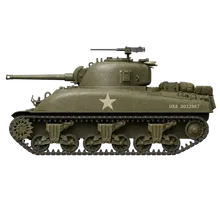
Crews painted their kills on the barrel: a ring for a tank, a mark for a gun, a mark for infantry broken and run. The game keeps that board for you, and it keeps it honestly. Nothing goes on it that the record cannot prove, and nothing comes off it because the man who earned it is dead. This chapter is what counts, who it counts to, and the five decorations the board can add up to.
What is credited
An enemy tank or gun the platoon knocks out counts to the tank whose shot did it: a hit at the same tick as the kill, from a gun of the platoon’s own. That is the whole test. If your shell went through and the tank brewed up on that second, it is yours. If it brewed up later from something else, or nobody’s shell can be found at that tick, it is nobody’s.
An enemy team that breaks and runs counts to the tank whose fire broke it. No round is ever aimed at men in the open and recorded as a hit, so what is asked of the log instead is which tank’s round or burst carried them over into broken, and whether they were still broken when they went. A team that rallied and was later broken again by something nobody fired, the pressure of a tank closing on them or an assault they fought off, is nobody’s mark.
Nothing is claimed the log cannot prove. A gun that goes quiet, or slips out of an arc, without ever being fired on earns nobody anything. This is stricter than the men would have been about their own barrels, and it is stricter than you will want it to be the first time a Tiger you were sure you hit turns out on the report to have driven away.
The board is drawn from the truth log, not from the plot. It can credit a kill your crew never saw, and it can refuse one they swear they watched burn.
The three marks
A tank knocked out paints armour. A gun knocked out paints a gun. A team broken paints infantry. Three marks, the way a crew painted them.
The mark belongs to the slot that fired, not to the hull it fired from. Your platoon has five slots, tanks one to five, and a slot’s tally is its crew’s, whatever they are driving. A tank that burns takes its own paint with it, but the crew’s tally does not start over: slot four’s marks carry into whatever tank slot four fields next. In Italy, in new tanks with new names, the board still says what each crew did in Tunisia.
Awards
Five decorations, each decided from the record and the state alone. Nothing is simulated to earn one; the board reads what happened and gives what was earned.
| Award | Earned by |
|---|---|
| Purple Heart | A man, once, the first time he is wounded or killed. He is not decorated twice for a second wound |
| Silver Star | A slot credited with three or more armoured kills in one action. Earned again for a later action that does it again |
| Bronze Star | A slot, once, the first time its running tally of armour, guns and teams together, over the whole campaign, reaches five |
| Presidential Unit Citation | The platoon, once, for an objective taken or held in an action that cost it two or more tanks |
| Campaign star | The platoon, for a campaign that reaches its last day. Not given to a campaign that ended with your death |
Every award but the Silver Star and the campaign star is given once. A man already carrying a Purple Heart is not given a second; a slot already carrying a Bronze Star earns nothing more for climbing past five; the platoon does not collect a second Unit Citation for a second costly objective. The Silver Star alone is earned action by action, so the same slot may wear it more than once, on different dates. The campaign star is earned only when a campaign ends, never by any one action, and a platoon that finishes Tunisia and then Anzio wears two.
A dead man keeps his award
The kill board is a record of what happened, not a roster of who is still standing to wear it. A man killed in the afternoon keeps the Purple Heart the morning gave him, and the slot he fired from keeps its marks. When the depot fills his seat, the stranger inherits a tank with a painted barrel and a board that says what the crew he has joined has done, and he did none of it. That, too, is how it was.
Reading the board
In a campaign the board is on the camp screen, beside the crew cards, and it is where you go on the morning after to find out what the day was worth. It does not tell you what you did wrong; the after-action report does that. It tells you what the platoon has to show for it, slot by slot and man by man, in the only currency the men themselves would have recognised.