A battle
Handbook · chapter 1
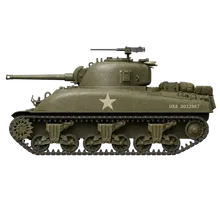
You are a second lieutenant with five Shermans and a radio. A battle is not something you watch; it is a series of short decisions, each made on what you have been told, followed by half a minute in which you can do nothing but wait. This chapter is the shape of that: the order you read before it starts, the rhythm it runs to, why the map is not to be trusted, and the five ways it can end.
The field order
Before the map opens you are handed a field order. It says what the situation is, what intelligence believes the enemy has in front of you, what your mission is, what your platoon consists of, where the objective is, and in plain words what will count as winning or losing. Read it. You can read it again at any time during the battle from the header, and you will want to, because the enemy estimate is what division told you, not what is there. Some days it is right. At Sidi Bou Zid it was not.
Acknowledge the order and the map opens on the first orders phase.
Thirty seconds at a time
A battle runs in periods. A period is thirty seconds of combat, and the simulation resolves it a second at a time, but you never see a second on its own. You see the period.
Each period has three phases, and they always come in the same order.
Orders. You transmit to any or all of your commanders, or to none of them. You can take as long as you like; nothing moves until you press Execute.
Execute. Thirty seconds pass for everyone at once. The tanks move, the gunners lay, the enemy fires, the men react. You watch it back from tank one’s seat, in the replay the chapter on the radio describes, and you cannot intervene.
Report. The commanders send what they have to send, and you are shown what your own crew saw. Then it is the orders phase again.
A commander you did not address this period carries on with his last order. Orders are standing: a tank told to move keeps moving until it arrives, until you tell it something else, or until the order becomes impossible. So the platoon does not stop when you go quiet. It does what you last said.
You are not obliged to say anything in an orders phase. Some of the best periods are the ones where you leave the platoon alone and let the plan run.
Nothing on the map is the truth
The map shows two things and neither is the truth. It shows what tank one’s own crew have seen, plotted where they believe it to be. And it shows what the other four commanders have reported over the net, plotted where they said it was. Both can be wrong, in what the thing is and in where it is, and they can disagree with each other about the same gun.
This is the whole game, so it is worth saying plainly. There is no view from above. You have a lieutenant’s view: a set of eyes in one turret, and four voices on a radio. What the enemy actually did is recorded, every second of it, and you are shown it after the battle, over your own plot, so you can see where you were wrong.
Dice
All chance is dice. No man is ever forced to break and no shot is ever guaranteed. Anything that can happen has a probability, and that probability is in the rules manual and nowhere else. The commanders who answer you on the radio are language models, but they cannot fire a gun or move a tank; they turn your words into an order, and the order is executed by the same dice as everything else.
The practical consequence is that a good plan fails sometimes and a bad one comes off. Play enough battles and the odds tell. Play one and anything can happen.
How a battle ends
The battle is checked at the end of every period against a short list of conditions, and it stops at the first one met.
| What happened | How it is recorded |
|---|---|
| Your tanks or friendly infantry have held the objective for two periods running with no enemy near it | Objective taken |
| The enemy has turned to withdraw and is clear of the objective | Enemy withdrawn |
| Three or more of your five tanks are knocked out, immobilised, or abandoned by their crews | Platoon combat-ineffective |
| The scenario’s time has run out | Time expired |
| Tank one is knocked out and you are killed | Lieutenant killed |
A hold mission is the other way round. Your platoon starts on the objective and the battle cannot end by taking it. You win by still being there, unbroken, with no enemy close, when the time runs out; you lose if the enemy is close to the objective and none of yours is on it for two periods running. The other three conditions stand.
Notice what is not on the list. Killing every enemy tank is not a condition. Losing two tanks is not a condition. The battle is about the objective and about whether your platoon is still a platoon, and a fight that costs you two tanks for the objective is a fight you won.
What is left afterwards
When a battle ends the game writes a record of it: every event, every second, the truth alongside what you were told. The result is what the campaign uses to decide what happens to your men next; the record is what the after-action report is drawn from. That report is the same map sheet with the fog lifted. You drag the timeline and watch where the enemy really was beside where you had him, and you read what it cost, what you did not know, what you did well, and what the men make of you.
In a campaign, a battle is one day. The men carry what it did to them into the next. When the campaign runs its course, it may continue into the next theater: the men carry, the tanks do not, and a year passes between.
In the Reference: §1.6, §1.1, §1.2, §1.3, §1.4, §1.5, §13.1, §13.2, §1.7