Five Shermans.
One radio.
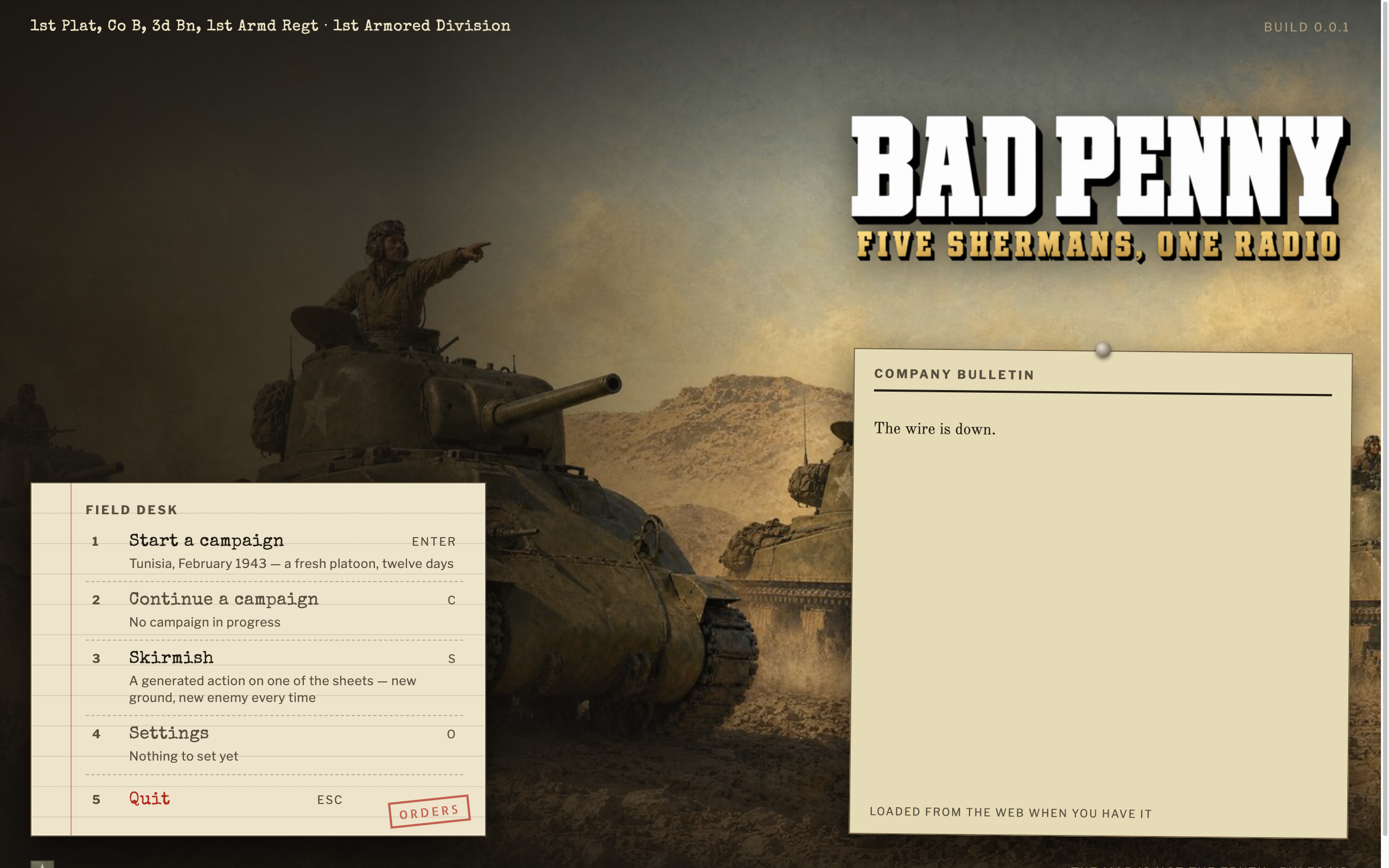
You are a second lieutenant of the US 1st Armored Division. Four sergeants answer you on the net and your own crew answers on the intercom. What you know of the battle is what they tell you, when they get round to telling you.
What you do
You talk. Speak on the net by callsign, in your own words: Three, hold and put HE on that gun. Four, move up on his left. A commander answers in his own voice. A cautious man asks back when an order is unclear; an aggressive one acts on his reading of it and tells you afterwards.
Your own crew is on the intercom, not the net. Gunner, that tank, AP goes to them, they answer in a few words, and the order lands on your own tank. If you would rather be brief, the net also takes a structured order: a callsign, a verb and a grid.
How a battle runs
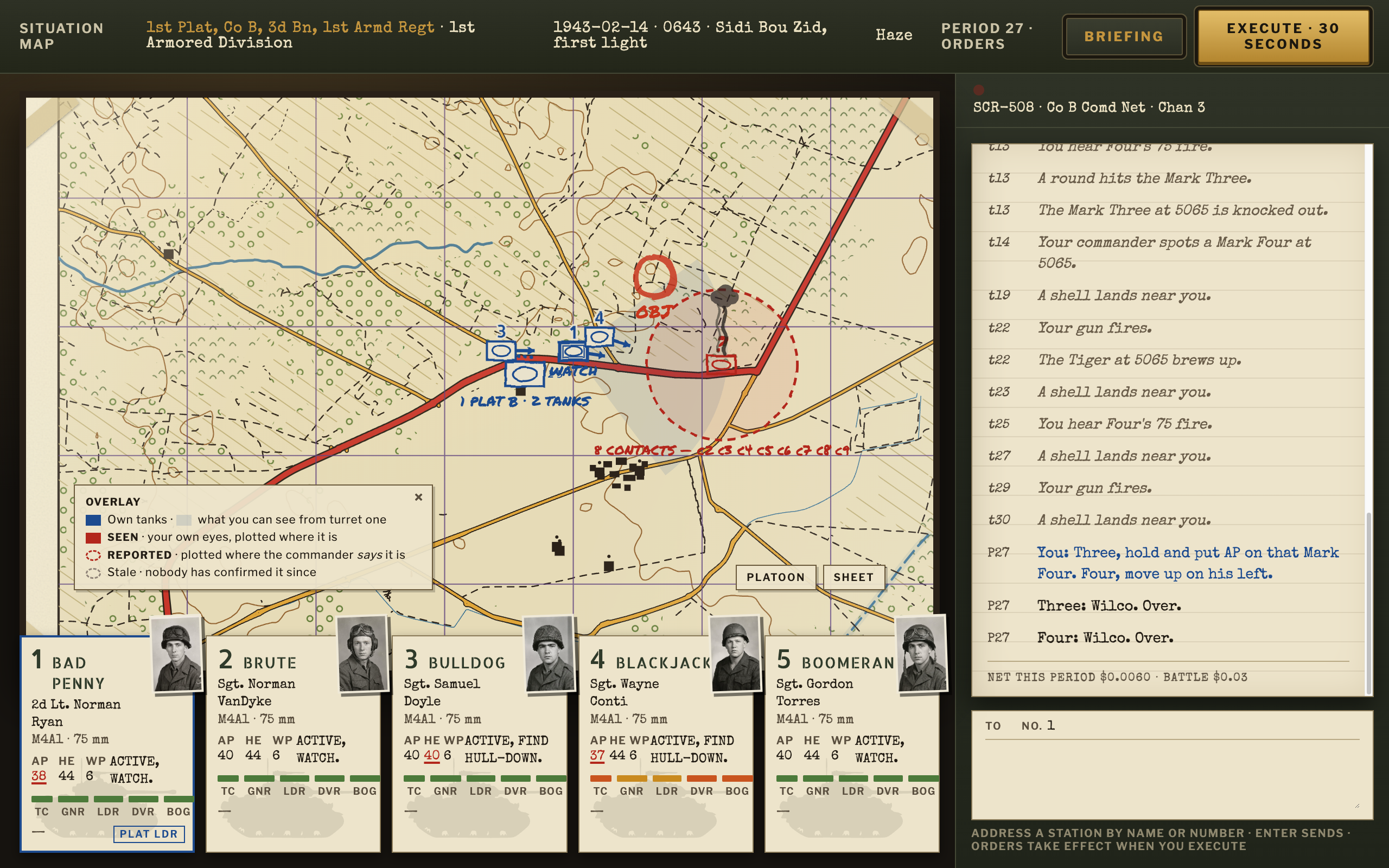
Before the map opens, you read your field order: the situation, what intelligence believes of the enemy, the mission, your platoon, the objective, and how the battle is won or lost. Nothing on it is generated by a model.
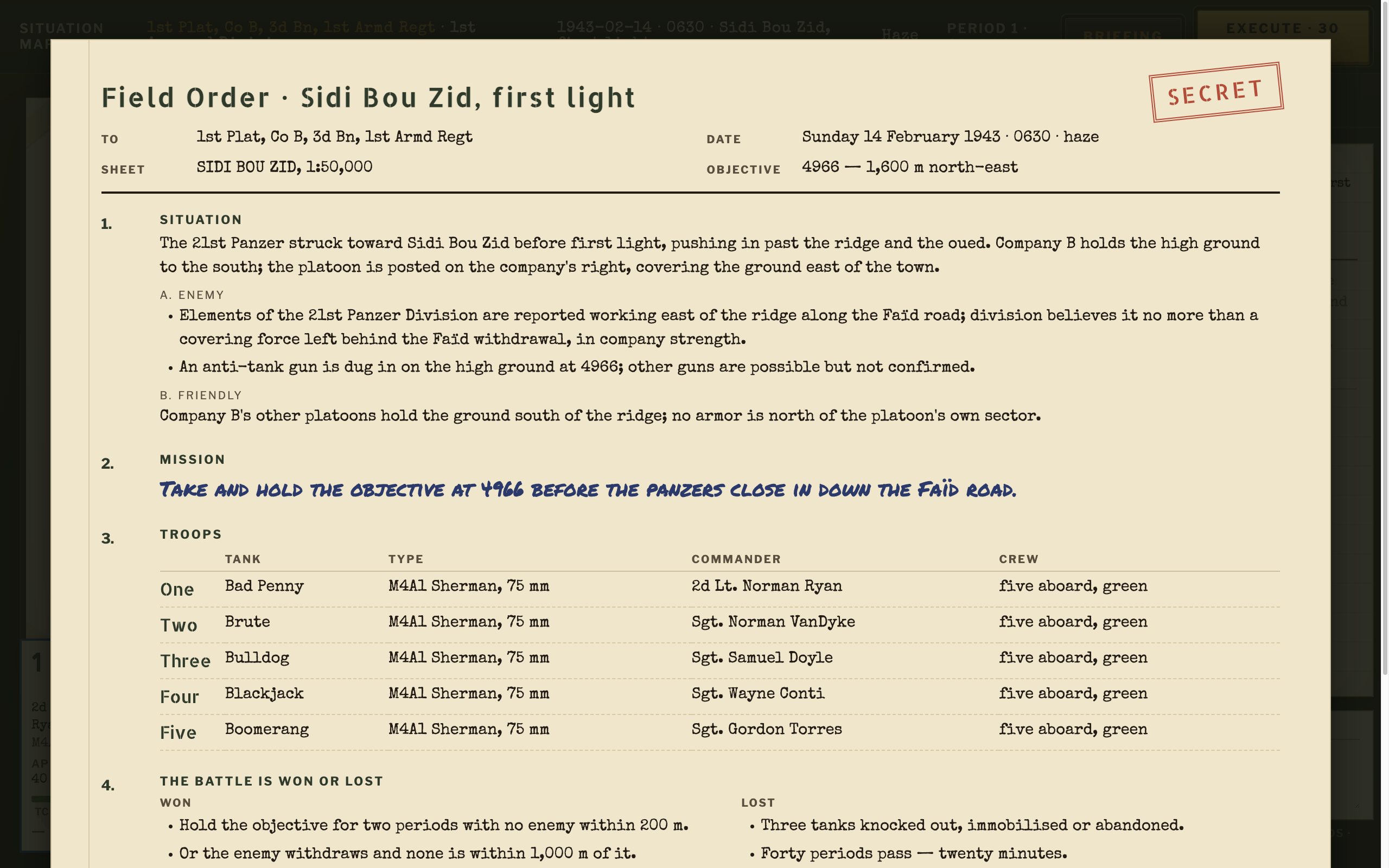
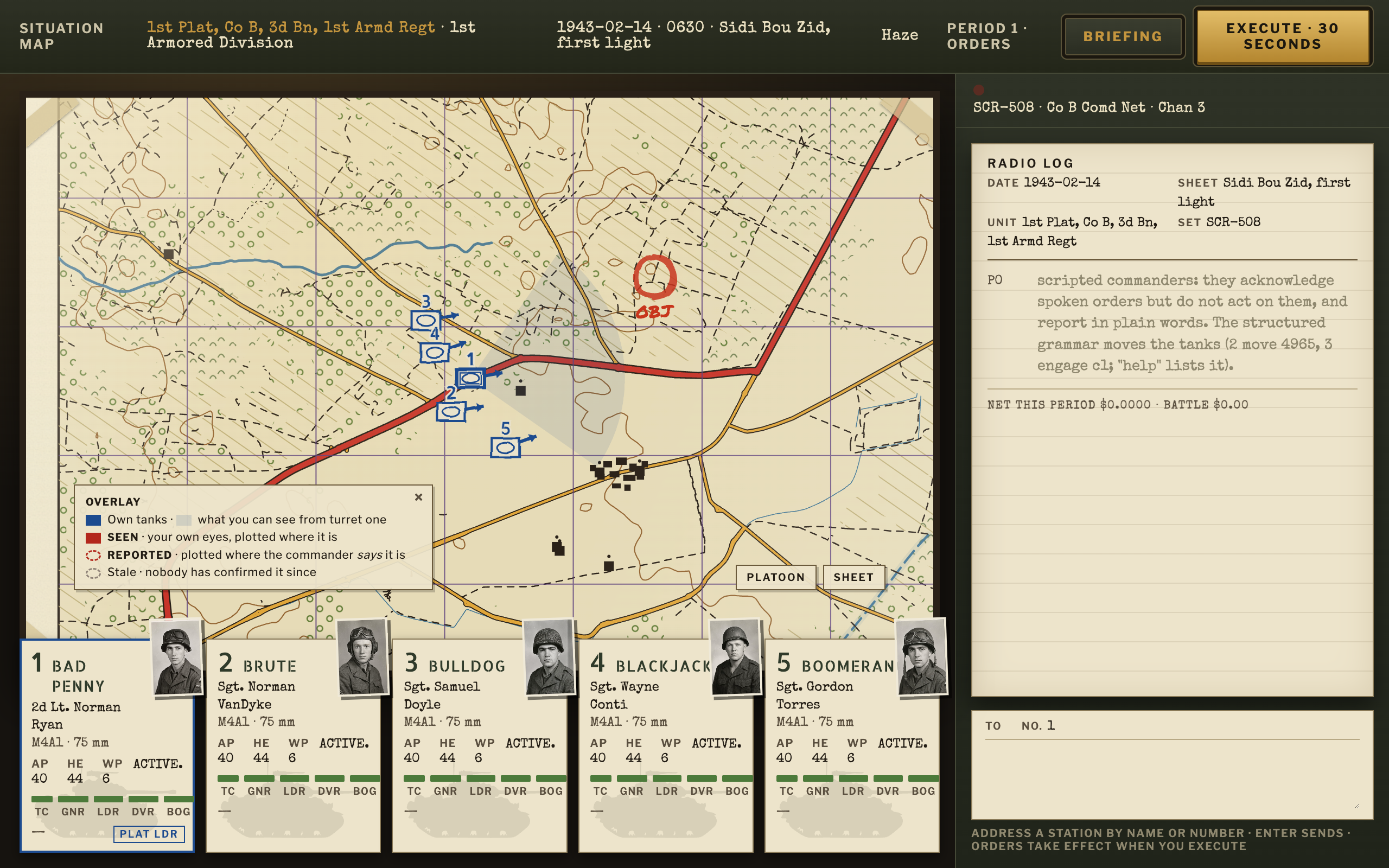
Then the battle is a run of thirty-second periods. In each one you transmit, the world moves for everyone at once, and you watch the period back from tank one's seat: what your crew saw, what landed near you, and the commanders' reports voiced at the moments they were sent. A late report arrives late.
The map
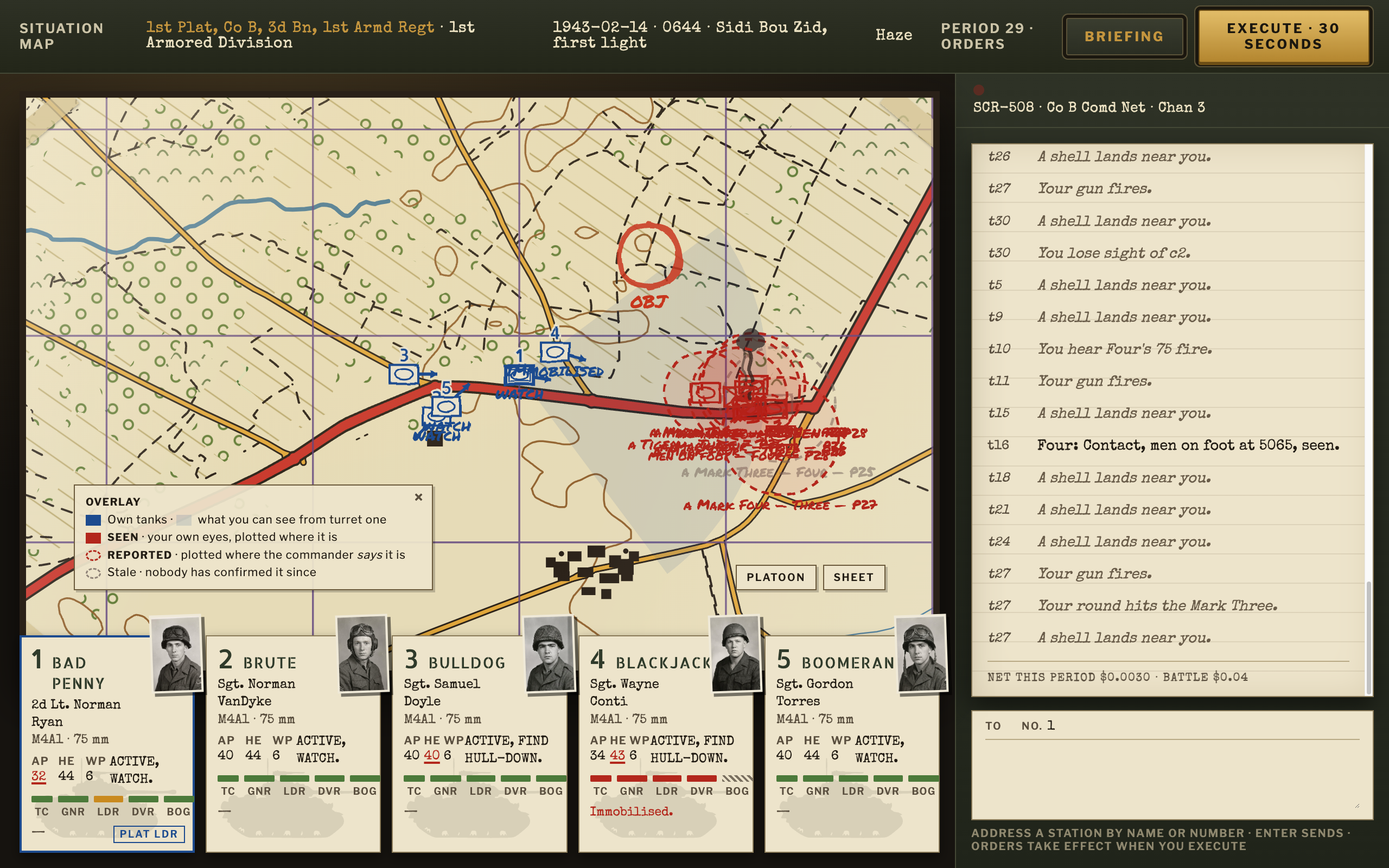
The sheet is drawn from the actual elevation and features of the place, renamed as it was in 1943: a GSGS reprint of the French 1:50,000. Over it lies the acetate, your platoon in FM 21-30 signs and the enemy where your men say he is.
A reported gun is a dashed circle until somebody lays eyes on it. A contact your crew has lost goes grey. Nothing the simulation knows that you do not reaches the sheet.
The campaign
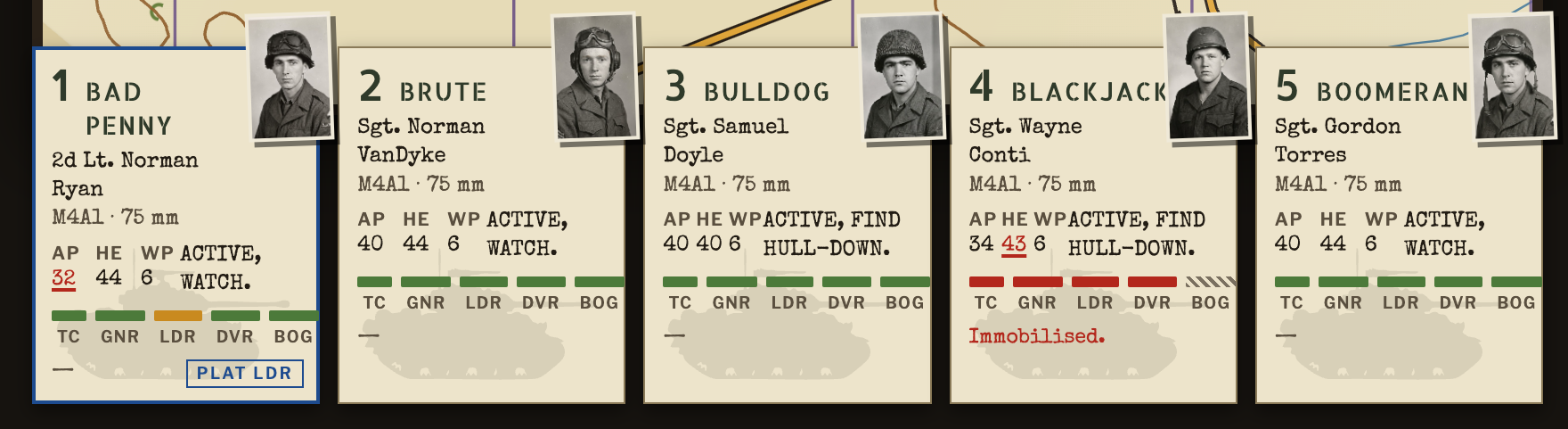
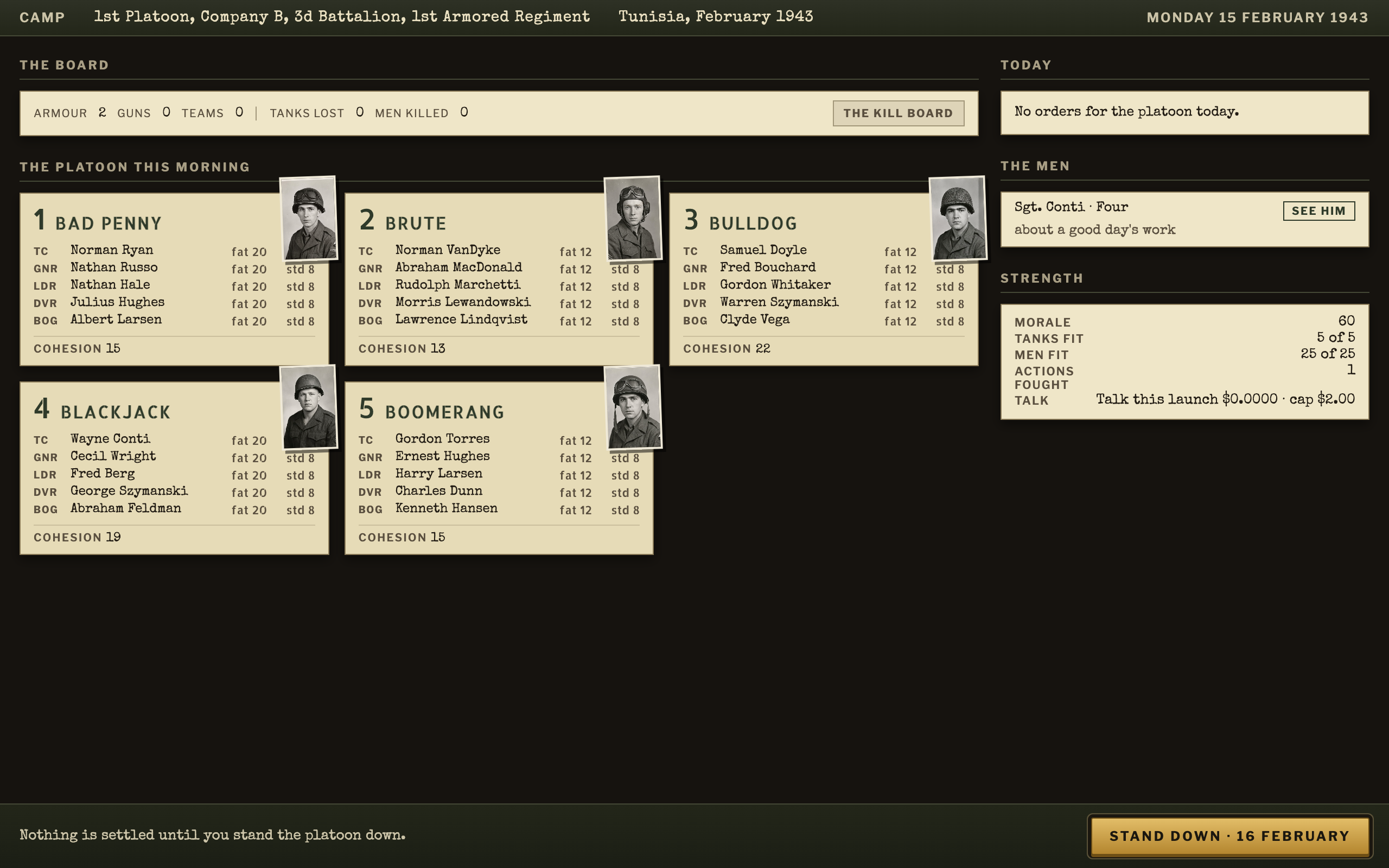
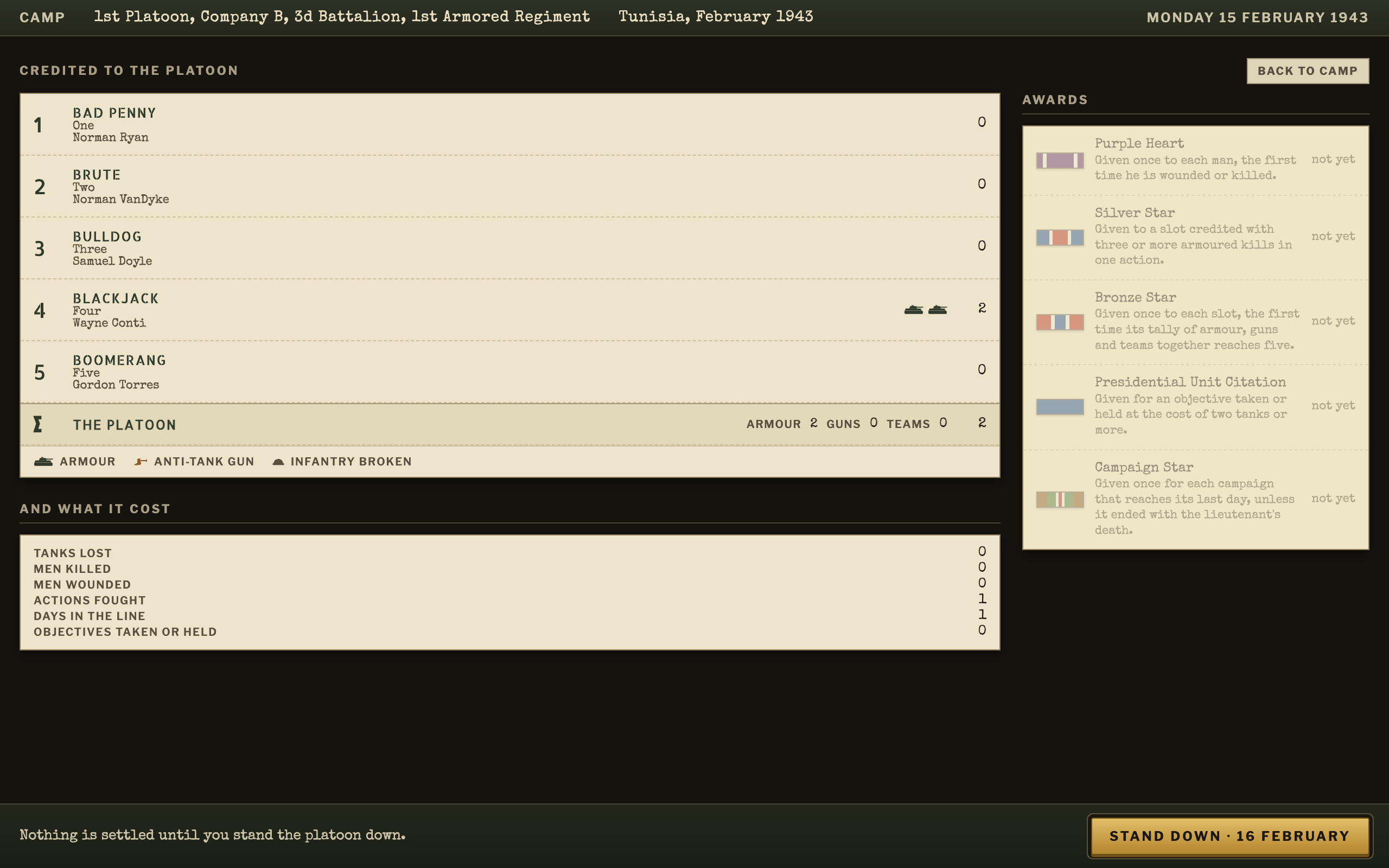
The same five tanks and the same men from one day to the next. They tire, they are wounded, they are killed, and what the depot sends back is green and knows nobody. Most days are not battles: those are the days your men get some of it back.
Some mornings a man comes to see you in camp, about a loss, a promotion, an odd turn, and you answer him by typing, the same as on the net. When Tunisia runs its course the camp's one button reads Move on, and the platoon sails for Anzio. The two theaters.
The report
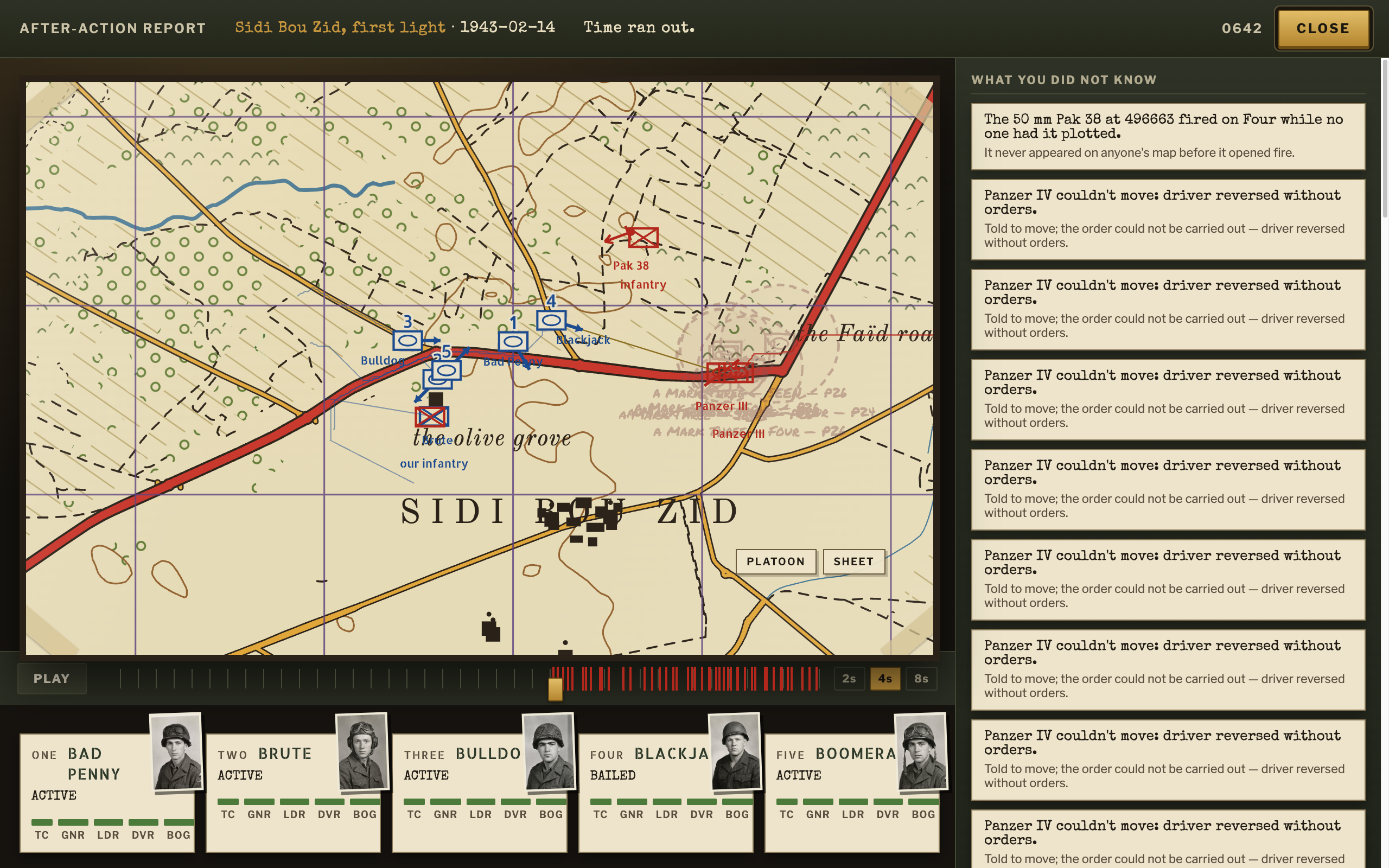
When a battle ends the game writes a record of it. The report is the same sheet with the fog off: drag the timeline and watch where the enemy really was beside where you had him plotted, with the findings down the right. What it cost, what you did not know, what you did well, and what the men make of you.
Nothing in it is written by a model.
System requirements
The live commanders need an internet connection. The scripted commanders, the campaign, the camp and the report run offline. More on the support page →