Movement
Chapter 5 · Movement · generated from the rules manual
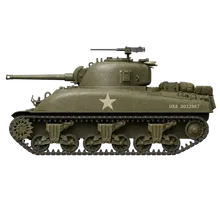
5.1. Speeds for the M4A1, before terrain cost: three speeds, cautious, normal and fast. On a road a tank moves noticeably faster than across country at each of them. A fast tank across country covers a couple of hundred metres in a period; a cautious one well under a hundred. Divide by the cell’s movement cost. Enemy vehicles have speeds of their own.
5.2. The driver plans a path weighing distance, movement cost, and bog risk. A poor driver sometimes treats bog cells as ordinary ground.
5.3. Each tick in a bog-risk cell, or any cell at fast speed, roll for trouble.
The chance is small on any one tick but adds up over a period. It rises with speed in a bog-risk cell, and on any ground a sharp turn taken fast is a risk of its own. A skilled driver cuts the chance by half; a poor one runs half again the risk.
Half of these results are bogged, half are a thrown track.
5.4. Recovery. Bogged: the driver rocks free in a few minutes, sooner with skill. Thrown track: the better part of half an hour with four men outside the tank, who are infantry in the open for that time. Under fire the crew may not work: each period under fire close by, roll against the commander’s discipline to keep them at it.
5.5. The turret traverses at a fixed rate, a full circle in under half a minute. A tank facing away from a threat needs both the traverse and, for hull-down, the driver. A jammed turret does not traverse at all: the gun can only be laid on what already lies within the gunner’s telescope arc of the turret’s present bearing, and anything else has to be brought into it by turning the hull.